
A slip or fall on private property might seem like a simple accident, but the aftermath is often anything but, it’s complex and costly. Georgia law puts a deber del propietario (owner’s duty) on property owners to keep their premises safe for visitors. When they fail, they can be held legally responsible. If you or someone you care about has been hurt, you need to understand when and how an owner is liable.
Key Takeaways
- Georgia property owners must use reasonable care to keep their property safe for guests, meaning they have to run regular inspections and fix any dangers they know about.
- To hold an owner liable for a fall, the victim has to prove the owner had actual or constructive knowledge of the hazard and didn’t deal with it.
- Georgia’s modified comparative negligence law (O.C.G.A. § 51-12-33) lets you recover damages even if you were partly at fault, as long as your share of the blame is less than 50%.
- Fall victims get two years to file a personal injury lawsuit in Georgia, according to the statute of limitations in O.C.G.A. § 9-3-33.
- Right after a fall on private property, you absolutely have to document the scene, get medical help right away, and collect statements from any witnesses.
El Deber Legal del Propietario en Georgia
In Georgia, the whole idea of an owner’s duty, or deber del propietario, comes mainly from the Official Code of Georgia Annotated (O.C.G.A.). Specifically, O.C.G.A. § 51-3-1 says that anyone who owns or occupies a piece of land is on the hook for keeping the premises and its approaches safe for their guests. This isn’t some absolute guarantee that no one will ever get hurt. Instead, it’s a duty to exercise cuidado ordinario (ordinary care) to keep the property reasonably safe.
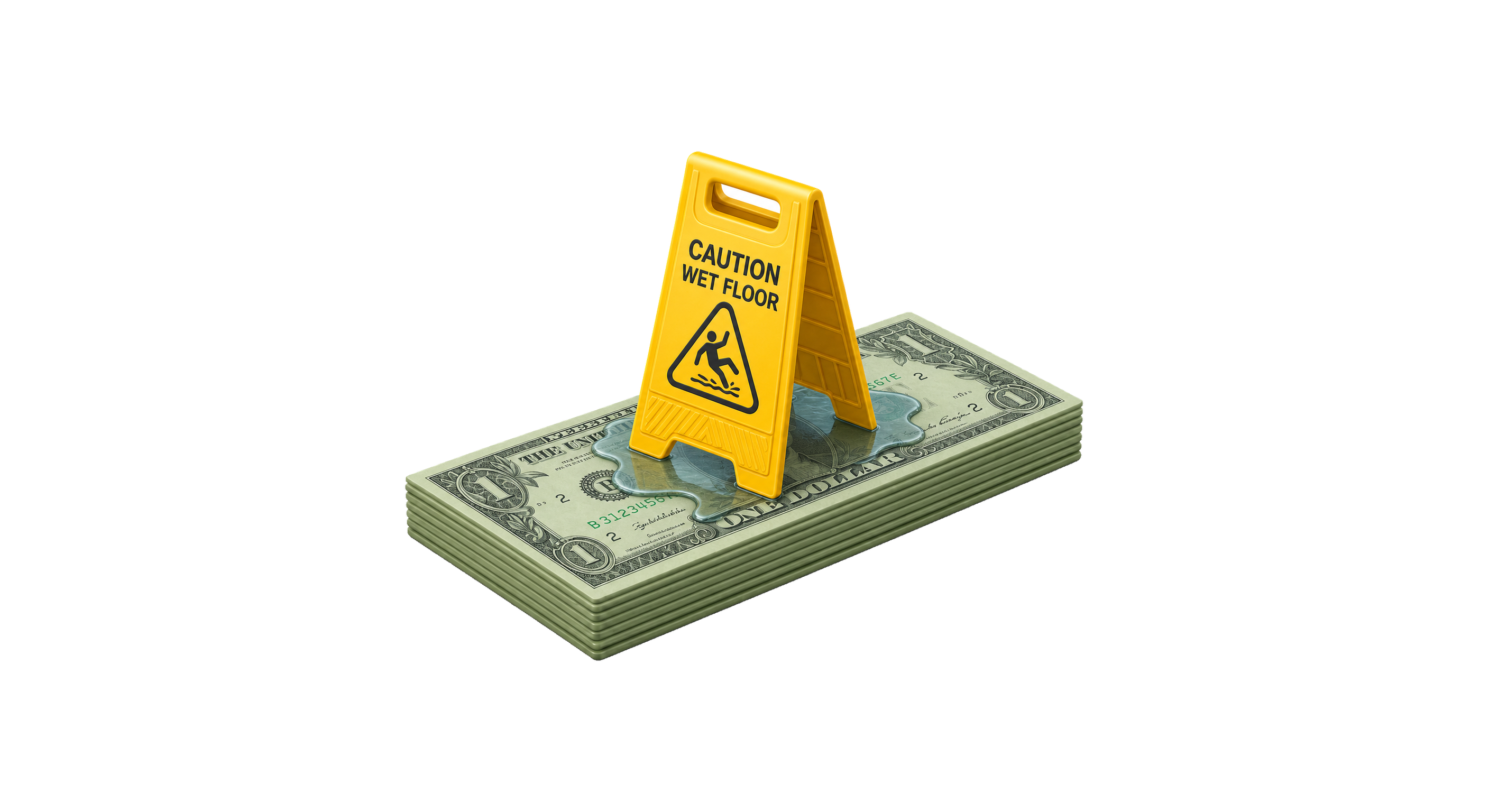
So what does “cuidado ordinario” actually mean? It means the owner has to take the same precautions a reasonable person would to stop guests from getting injured. This includes inspecting the property for hazards, fixing any unsafe conditions they find, and warning guests about dangers that aren’t immediately obvious. For instance, if a shop owner in downtown Atlanta knows a leaky roof has created a puddle in the entranceway, they have a duty to either mop it up or put out a warning sign. Failing to do that could easily be seen as a breach of their duty.
¿Resbalón y caída?
Sepa cuánto vale su caso con la Calculadora de Pagos para Caída por Resbalón con IA ¡GRATIS!
Iniciar mi evaluación gratisThe key word here is conocimiento, or knowledge. For an owner to be considered negligent, the injured person has to show the owner had either actual or constructive knowledge of the hazard. Conocimiento real is straightforward: the owner flat-out knew about the dangerous condition. Conocimiento constructivo is a bit more involved. It means the owner *should have known* about the danger if they had been using reasonable care to inspect their property. If a step at the entrance of a Buckhead apartment building has been busted for months and multiple tenants have complained, the owner has constructive knowledge of that hazard, even if they claim they never personally “saw” it (a common excuse).
This distinction is everything. You can’t just fall and expect to win. You’ve got to prove the owner’s negligence caused your fall. Georgia courts, like the Fulton County Superior Court, will scrutinize the evidence to figure out if the owner met their duty of care. Owners will frequently claim they didn’t know about the hazard or that the injured person was completely at fault for their own fall. It’s a legal fight, and without solid proof, it’s a tough one to win.
Tipos de Invitados y el Deber que se Les Debe
Georgia law sorts people who enter a property into different categories, and the owner’s duty changes depending on which box you fit in. Getting this right is a make-or-break part of any caída en propiedad privada case:
- Invitados (Invitees): These are people on the property for the mutual benefit of both the owner and the visitor, or for a business reason. Think customers in a store, patients at a doctor’s office, or guests in a hotel. Owners owe invitees the highest duty: they must exercise cuidado ordinario to keep the premises and approaches safe. This includes the responsibility to inspect for hazards and either fix them or warn about them. Most slip-and-fall cases fall into this category.
- Licenciatarios (Licensees): These are people on the property with the owner’s permission, but for their own benefit or pleasure, not for mutual gain. This might be a friend visiting your home, a door-to-door salesperson, or someone taking a shortcut through your yard. For licensees, the owner’s duty is much lower. They just have to avoid willfully or wantonly injuring them and must warn them of known, non-obvious dangers that the licensee probably wouldn’t find on their own. The owner has no duty to actively inspect the property to find dangers for a licensee.
- Intrusos (Trespassers): These are people on the property without permission. An owner generally owes no duty to a trespasser except not to willfully or wantonly injure them once they know they’re there. There are some exceptions, like the “attractive nuisance doctrine” for children drawn to something dangerous like an unfenced pool. For most adult trespassers, however, recovering for an injury is next to impossible.
Figuring out the victim’s status is one of the first things we do when evaluating a fall claim. A customer who slips in a Marietta supermarket is owed a much higher standard of care than a friend who trips in a pothole in your driveway while visiting. Personal injury lawyers often spend a lot of time establishing the visitor’s correct status because it directly controls the duty of care the owner was supposed to provide.
Causas Comunes de Caídas y Cómo Probar la Negligencia
Falls happen for all sorts of reasons, but a lot of them could be prevented if property owners just exercised proper care. Some of the most common causes we see in Georgia’s courts include:
- Suelos mojados o resbaladizos: Spills that weren’t cleaned up, freshly mopped floors without a sign, or entryways wet from rain.
- Iluminación inadecuada: Dark stairwells or hallways where you can’t see hazards.
- Obstáculos inesperados: Merchandise left in store aisles, electrical cords stretched across walkways, or loose and bunched-up rugs.
- Defectos en el pavimento o escaleras: Baches en estacionamientos, broken sidewalks, uneven steps, or loose handrails.
- Falta de mantenimiento: Worn-out flooring, torn carpets, or uneven surfaces that haven’t been repaired.
Proving an owner was negligent in a caída en propiedad privada case takes more than just saying they were careless. You’re going to need hard evidence showing:
- Existencia de una condición peligrosa: There must have been a condition on the property that posed an unreasonable risk to visitors.
- Conocimiento del propietario: The owner knew or should have known about the dangerous condition. This is often the hardest part to prove. We might look for evidence that the owner was warned before, that the hazard was there long enough for them to find it, or that they had no reasonable inspection system in place. For a spill in a store, for instance, we’d investigate how long that spill was on the floor and whether any employee saw it or should have seen it during their rounds.
- Incumplimiento del deber: The owner didn’t fix the hazard or warn people about it.
- Causalidad: The dangerous condition was the direct cause of your injuries.
- Daños: You suffered actual injuries because of the fall.
Gathering evidence right after an incident is so important. This means taking pictures of the scene, the hazard, and your injuries. It means getting contact information from any witnesses. And it means reporting the incident to the owner or manager. Don’t underestimate the power of a written incident report. A common mistake is waiting too long, and by the time the victim finally seeks legal advice, the key evidence might be gone, the hazard fixed, or the witnesses’ memories have faded. In Georgia courts, a strong case is built on documented facts, not vague recollections.
Defensas Comunes de los Propietarios y la Ley de Georgia
Property owners, or more accurately, their insurance companies, don’t just roll over and accept responsibility. They have a playbook of common defenses they’ll use to try and get out of paying compensation:
- Falta de conocimiento: They’ll argue they had no actual or constructive knowledge of the hazard. This is where your evidence showing how long the danger existed, or the owner’s lack of a proper inspection routine, becomes critical.
- Peligro abierto y obvio: This is a powerful defense in Georgia. If a hazard was so obvious that a reasonable person should have seen and avoided it, the owner can argue they had no duty to warn about it. A giant hole in the middle of a well-lit parking lot, for example, might be considered open and obvious. What’s “obvious,” though, is often subjective and gets argued about in court.
- Responsabilidad comparativa: Georgia operates under a negligencia comparativa modificada doctrine, outlined in O.C.G.A. § 51-12-33. This means if you were partly to blame for your own fall (maybe you were distracted by your phone or just not paying attention), your damages can be reduced by your percentage of fault. If you’re found to be 50% or more at fault, you get nothing. For example, if a jury in Gwinnett County Superior Court awards you $100,000 in damages but finds you were 20% at fault, your recovery would be cut to $80,000.
- Falta de causalidad: The owner might argue that the dangerous condition didn’t actually cause your injuries, or that your injuries were pre-existing before the fall.
Getting past these defenses requires a deep understanding of Georgia’s personal injury law and a well-planned legal strategy. It’s not at all unusual for insurance companies to float a lowball settlement offer early on, hoping the victim doesn’t know their rights or the real value of their claim. It’s so important not to accept an offer without fully understanding the extent of your injuries and all the future costs that come with them.
Pasos a Seguir Después de una Caída en Propiedad Privada
If you or someone you know is hurt in a caída en propiedad privada, the first few steps you take can make or break any future claim:
- Busque atención médica: Your health is priority one. Even if your injuries seem minor, get checked out right away. Some injuries, like concussions or soft tissue damage, might not show up for hours or even days. A detailed medical record also is powerful proof of your injuries and their cause. A visit to a hospital like Grady Memorial in Atlanta or Northside Hospital is a non-negotiable first step.
- Reporte el incidente: Tell the owner, manager, or an employee about your fall as soon as possible. Insist that they create an incident report and ask for a copy. Make sure it accurately describes what happened.
- Documente la escena: If it’s safe to do so, use your phone to take pictures or videos of the dangerous condition that caused you to fall, getting shots from different angles and distances. Capture the surrounding area, any warning signs (or lack thereof), and your injuries. This footage can be invaluable evidence.
- Obtenga información de testigos: If anyone saw you fall, get their name and contact information. Their testimony can be a huge help in backing up your side of the story.
- Conserve la ropa y los zapatos: Don’t wash or throw out the clothes or shoes you were wearing when you fell. They might hold evidence (like dirt or scuff marks) that could be relevant to the case.
- Evite hacer declaraciones grabadas: Do not talk to the owner’s insurance adjuster or give a recorded statement without talking to a lawyer first. They are trained to get you to say things they can use against you.
- Consulte a un abogado: An experienced personal injury lawyer in Georgia can evaluate your case, help you understand your rights, and guide you through the complicated legal process. Remember, the statute of limitations to file a lawsuit for personal injury in Georgia is generally two years from the date of the injury, per O.C.G.A. § 9-3-33. Don’t wait until it’s too late.
Taking these steps doesn’t guarantee a win, but it definitely improves your odds of building a solid case and getting the compensation you deserve for your injuries, medical bills, lost wages, and pain and suffering. Understanding the deber del propietario in Georgia is the first step for anyone who’s been hurt in a fall on private property. Owners have a legal obligation to keep their property safe, and when they fail, they need to be held accountable. Don’t underestimate how complicated these cases can be. Getting professional legal advice is a critical move to protect your rights and seek justice.
¿Qué es el “cuidado ordinario” en el contexto de la responsabilidad del propietario?
“Cuidado ordinario” is the level of care a reasonably careful person would use in a similar situation. For a property owner, it means taking reasonable steps to inspect their property for dangers, fix unsafe conditions, and warn visitors about any non-obvious risks, all to keep the place reasonably safe.
¿Puedo demandar si la caída ocurrió en la casa de un amigo?
Yes, you can, but the duty of care is lower. As a “licensee” (a social guest), your friend only owes you a duty not to willfully or wantonly injure you and to warn you of known dangers you’re not likely to spot yourself. Proving negligence in these situations is tougher than on a commercial property.
¿Qué significa “conocimiento constructivo” del peligro?
Constructive knowledge means the owner didn’t have direct, firsthand knowledge of a hazard, but they *should have* known about it if they were properly inspecting and maintaining their property. For example, if a spill has been on a store floor for a couple of hours, it’s fair to argue the owner had constructive knowledge.
¿Qué sucede si yo también tuve algo de culpa en mi caída?
Georgia uses a modified comparative negligence rule. If you’re found to be partly at fault, your damages will be reduced by your percentage of blame. But if your share of the fault is 50% or more, you are barred from recovering any compensation at all.
¿Cuánto tiempo tengo para presentar una demanda por caída en Georgia?
In Georgia, the statute of limitations for most personal injury lawsuits, including falls, is two years from the date of the injury. That’s from O.C.G.A. § 9-3-33. You need to act fast to make sure you don’t lose your right to file a claim.



